Utility-Scale Solar Farm Aerial Thermography: IEC 62446-3 Drone Diagnostics in the Mojave Desert
Nevada is home to some of the largest photovoltaic installations in the world. Learn how drone-mounted radiometric thermal sensors survey thousands of panels in hours, pinpointing sub-module anomalies and string faults compliant with IEC 62446-3.
Echo Point Flight Operations
Thermography & Industrial Asset Specialist
1. The Challenge of Solar Array Maintenance in Extreme Desert Environments
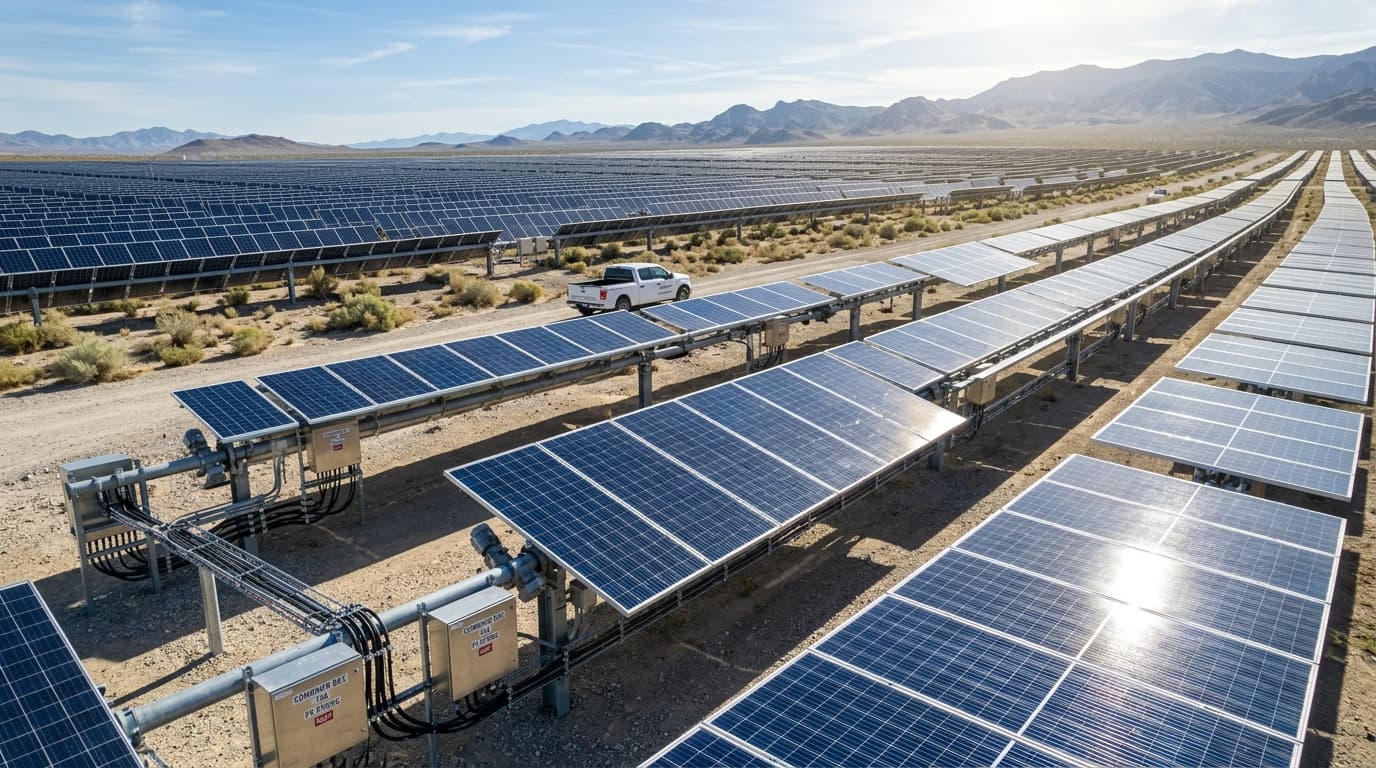
Utility-scale photovoltaic (PV) facilities in the Mojave Desert, Apex Industrial Park, and Moapa Valley operate under grueling environmental conditions. Ambient summer temperatures exceeding 115°F, intense solar irradiance, blowing desert sand, and thermal expansion place massive stress on solar cells, bypass diodes, and inverter strings.
When sub-module hotspots or cracked cells develop, they degrade energy yield across an entire string. Manual ground inspection with handheld thermal guns across a 200MW facility requires hundreds of hours and exposes technicians to extreme desert heat.
2. Aerial Radiometric Thermography: Speed and Diagnostic Precision
By deploying aerial thermal and high-resolution visual inspection workflows, commercial drone operations can inspect extensive photovoltaic arrays with speed and precision.
Unlike standard cameras that only show color gradients, calibrated radiometric sensors capture temperature differential data across photovoltaic tables. This allows inspectors to detect delta-T (temperature difference) anomalies down to fractional degrees, identifying faults before components suffer severe thermal degradation.
Echo Point Aero conducts all commercial solar thermography flights in strict adherence to IEC 62446-3 international standards, maintaining minimum solar irradiance thresholds (>600 W/m²), proper viewing angles to eliminate sun glare reflection, and certified calibration protocols.
3. Common Photovoltaic Anomalies Detected from the Air
Our diagnostic inspection reports categorize anomalies into standardized severity tiers:
• Bypass Diode Failures: Characterized by one-third or two-thirds of a module overheating in a distinct rectangular pattern.
• Single Cell Hotspots: Point-source temperature spikes caused by micro-cracks, soldering defects, or localized bird soiling.
• Open Circuit String Faults: Entire strings of modules operating at open-circuit voltage, indicating disconnected cables or blown combiner fuses.
• Inverter Clipping & Potential Induced Degradation (PID): Subtle voltage gradients across multiple tables indicating systemic balance-of-system degradation.
Topic Tags
Technical FAQ: Renewable Energy
What weather conditions are required for valid solar farm drone thermography?▾
Per IEC 62446-3 standards, inspections must be conducted under clear skies with solar irradiance exceeding 600 W/m² (ideally >700 W/m²), wind speeds below 15 mph, and clean panels free from rain or dew.
How are thermal inspection findings delivered to facility asset managers?▾
Clients receive an interactive digital twin map and comprehensive PDF audit report. Every anomaly is georeferenced with GPS coordinates, module row/column IDs, temperature delta-T, and remediation priority recommendations.
Can drone inspections detect warranty claims for defective solar panels?▾
Yes. Our high-resolution radiometric imagery and calibrated temperature differentials provide the precise evidentiary documentation required by manufacturers to honor equipment warranty replacements.
Schedule Your Las Vegas Aerial Mission
FAA Part 107 certified flight crews ready for deployment across Clark County, Henderson, North Las Vegas, and Southern Nevada. Volumetric surveys, orthomosaics, and cinema pursuit flights delivered with rapid turnaround.